

Berlin Bird Crisis
A few months ago, a very good friend of mine pulled off a local miracle: she found a nice flat here in Berlin in less than a month. But after moving in, and despite some great support from her building’s facility manager, she found herself face-to-face with a disgusting problem. The staircase in front of her door was completely covered in bird poop and feathers.
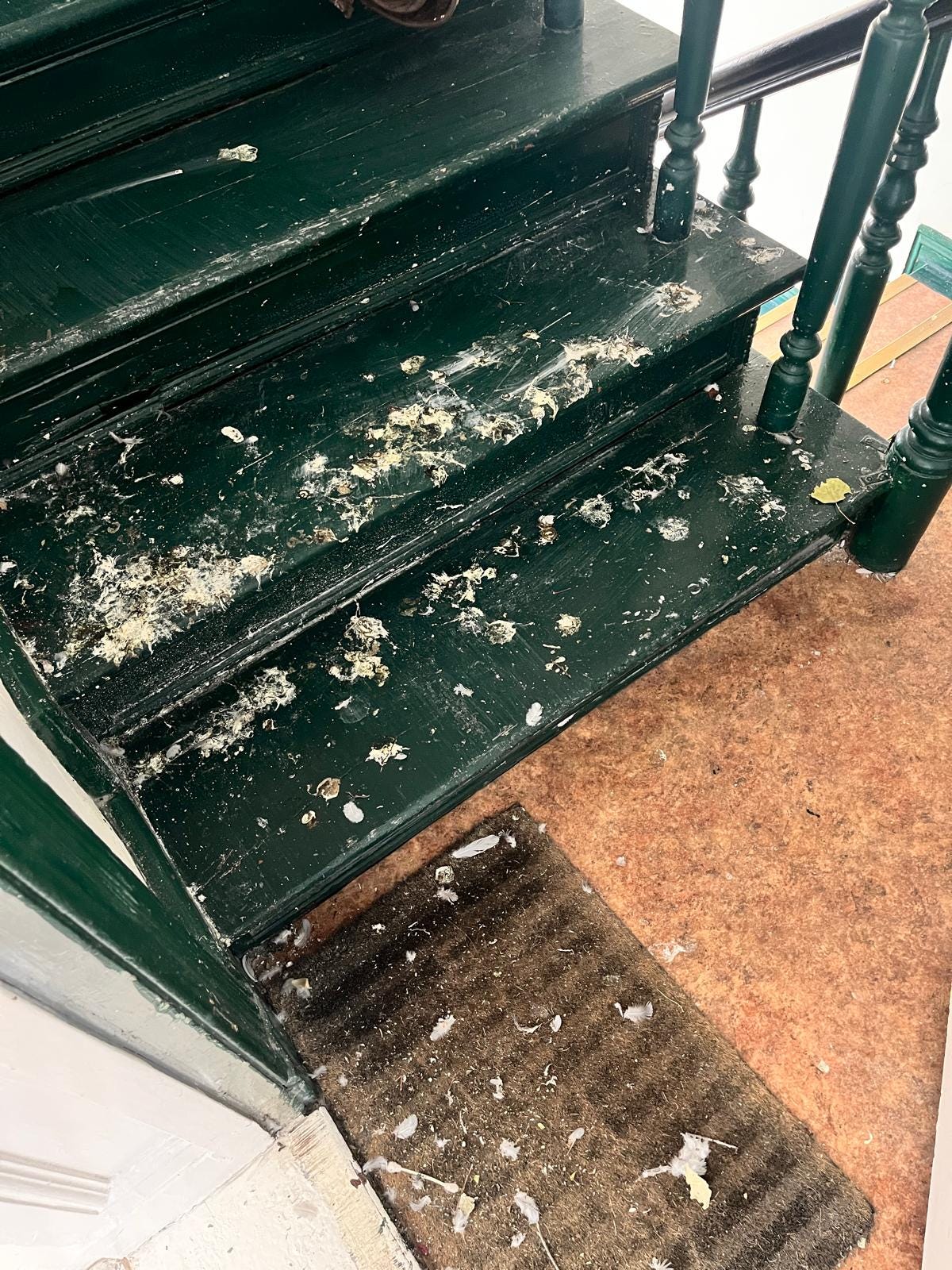
After a battle with the building manager, she got a temporary solution and someone came to clean it up. Unfortunately, she later found out the root cause: an elderly neighbour enjoyed having the birds around. This neighbour would leave the staircase windows open and even leave food out to invite them inside. Because heat rises, the warmth of the top floor pushed the birds up, settling them directly on top of my friend’s stairs and front door.
What I thought was crazy is that this had been going on for weeks. Fortunately, I surround myself with people smarter than me. My friend, who is a brilliant creative, realized that to keep the staircases clean, she needed the help of every single neighbour. She needed them to actively close the windows and avoid letting the pigeons inside.
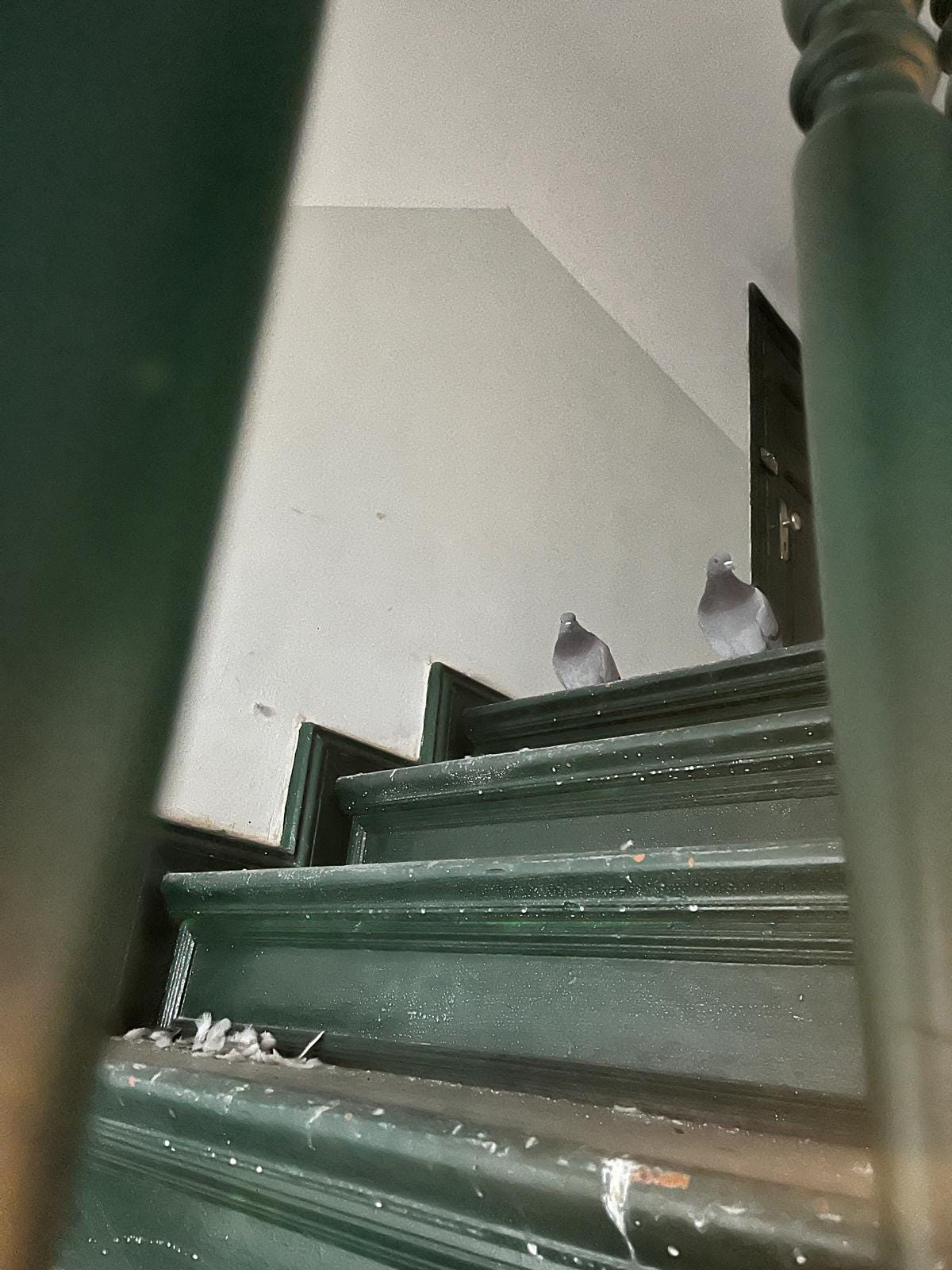
This got me thinking about how to facilitate change in a space where communication is complicated. My friend is an immigrant living in Germany, in a building with multiple neighbours from different cultural backgrounds. That adds steep language and cultural barriers to an already tough task: communicating easily with people who are honestly just too tired after work to care about a window. Most of them aren’t even affected by the birds that terrorize my friend and her top-floor neighbour.
Her situation in that stairwell highlights a really common problem: how do you get a bunch of tired, busy neighbours with different backgrounds to work together on something that doesn’t even directly affect most of them? (Sounds familiar to SO many things in life, right?)
Instead of just trying to persuade people, sometimes you have to design a solution that makes the helpful choice the absolute easiest one to make. It’s about setting up the environment so that cooperating doesn’t feel like a chore for someone who just wants to get home and relax. We can see how this same logic is applied in other, much larger circumstances:
Mimes for Colombian Traffic
Bogotá, like most chaotic capitals, had a massive traffic problem. This was due to incredibly car-centric urban design, complicated geography, and rough weather (y’all Rolos have my respect). Also, like many places, it struggled with corruption. Enforcing traffic laws was complicated because drivers could often just slip some pesos to an official and be done with it, adding even more chaos to the situation.
So the mayor of Bogotá, who happened to be a mathematician and philosopher (a great combo for a politician) decided to try a massive social experiment. He replaced many of the corrupt traffic cops with a battalion of mimes. Their job was to go out into the streets and visually mock the transgressions of reckless drivers. You might think this would result in total failure, but there is a reason you’re reading about it here.
The end result was an absolute surprise: public shaming from a mime in a colourful outfit was actually more effective at controlling people’s behaviour than the threat of a fine from a corrupt official. Mimes had no incentive not to do their job. What are you going to do, bribe a mime so they don’t make fun of you? Making fun of you is their job. Unlike the police, who often had quotas to meet to fund their departments, the mimes just provided pure, unbribable social friction.
During this campaign, traffic fatalities in Bogotá dropped by 50%. It was an incredibly impactful initiative with a creative twist. While the campaign was eventually discontinued, it remains a brilliant example of how reframing a system of incentives and punishments can steer human behaviour toward a more amicable society.
Dying a stupid death
Do y’all remember the viral video “Dumb Ways to Die”? I didn’t know this until I started researching, but it was actually a campaign from the Melbourne transit authority. Australia was having an issue with preventable deaths because people were ignoring train crossings or failing to look both ways. The city had already put up traditional warning signs, but people just ignored them, they had become background noise.
So, with the help of a very catchy song and some clever design, they created a morbid but adorable propaganda campaign. “Dumb Ways to Die” featured cute animated characters dying in increasingly absurd ways; like poking a grizzly bear or keeping a rattlesnake as a pet and culminated in characters dying by ignoring train safety rules..
Because the design cut through the boring, bureaucratic noise, the campaign led to a 30 percent reduction in near-miss accidents on the Melbourne rail network. It also spawned two successful mobile video games, and the franchise was eventually bought by a game studio for 2.25 million AUD.
Pigeon Fascism
Which brings us back to my friend and her bird problem. She knew a standard, polite “please keep the window closed” note would just become background noise, ignored by tired neighbours just like those old train safety signs. To get their attention, she took a page out of the behavioural design playbook.
Instead of a boring memo, she designed a series of posters to request that the staircase windows stay closed and that no one leave food on the windowsills.
What I find amazing is the design choice she made. She created a set of stark, authoritarian-style warnings, making it look like we are living under a bird-themed surveillance state where the pigeons are always watching. I’ve decided to moniker this aesthetic Pigeon Fascism.
It’s completely over-the-top, done on purpose to draw eyes, and impossible to ignore. It is a hilarious way to impose a rule, slowly reduce human friction, and achieve a common goal without needing a shared language. I think we can all draw something out of it regarding how we can creatively hack human behaviour, and sometimes, be the passive-aggressive change we want to see in the world to stop neighbors from feeding the freaking birds.
Now, if only we could use this exact aesthetic as a metaphor for every other annoying and dangerous thing in our lives, right?
Take a look at her masterpiece campaign below.


