

The $1 Billion Question
Some time ago, I saw a post on LinkedIn talking about Khaby Lame and his reported $1 billion deal to sell the company managing his rights, along with his image and likeness, to be used in AI models. More specifically, the deal explicitly authorizes:
The use of his Face ID, Voice ID, and behavioral models for AI Digital Twin development” for the creation of multilingual, cross-time-zone livestream e-commerce content.
This looks like one of the most consequential creator deals to date, but it is also a bit sketchy if you ask me. Lame has secured generational wealth in a single deal after a social media success story less than a decade in the making. Between posting his first videos in March 2020 and closing this deal in January 2026, Lame signed massive brand deals and earned worldwide recognition. He is probably one of the most well-known faces in the post-COVID world. But is his company and the valuation of his image actually worth almost a billion dollars?
I am really wondering if the math is mathing for the Hong Kong-based Rich Sparkle Holdings. Yes, he could be raking in some nice millions with his endorsements right now. But with the average lifespan of an influencer hovering around three to seven years, Lame is likely entering the dusk of his most lucrative era. The novelty of his content has naturally fizzled out. A deal like this seems like a brilliant swan song to cash out before the churn of the industry pushes him away from relevance, which some could argue has already started happening.
I think the valuation of this deal relies on a long-term vision regarding the asset itself. They are buying Khaby’s identity. They are acquiring the capacity to license his entire imagery, voice, and semblance to create synthetic content for years to come. They are creating intellectual property out of human similitude. This represents the first steps into completely uncharted territory regarding ownership, identity, and our basic trust in humans.
Khaby on Demand
The original format of Khaby’s content relied on simple, universal facial and hand gestures. He transcended language barriers without speaking a word. Now, with an AI persona that can communicate and sell any product in any language to any market, even that limitation has disappeared.
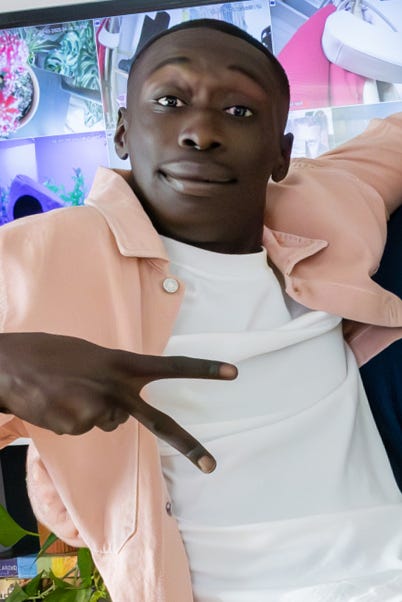
Content can now be generated, localized, distributed, and monetized at an industrial scale without the creator being present or even aware. I think this is the most dangerous part. Khaby or his estate could easily lose control over the usage of this IP in the near future through corporate restructuring, a buyout, or another rights deal. What happens then?
Anyone could use his semblance to say anything, anywhere. We might see AI Khaby selling burgers in a McDonald’s ad in Germany. But his face could also be superimposed onto a group of African teens looting a store in Paris in a fake AI video designed to push anti-immigration propaganda.
I do not have the credentials, experience, or track record to dive too deeply into the racial debate here. But I do think we need to analyze this deal through the framing of a Black man selling the rights to his image to be piloted by a corporation for mass worldwide entertainment.
The “legacy” questions
There are multiple layers of ethical questions we have not answered, or even asked, about a deal like this. On a surface level, the first questions are about ownership and control once the genie is out of the bottle. As this technology improves and the capacity for behavior modification gets more sophisticated, could an agentic Khaby be used to persuade the youth away from democracy and toward an authoritarian regime?
What is left for smaller creators when massive brands can afford to just license highly recognizable AI faces rather than rely on new human talent? I do not think this will completely destroy the market. Throughout history, we have seen that audiences get bored of seeing the exact same faces, and no single celebrity can perform perfectly forever. But it does make you wonder what happens when we are constantly exposed to a human figure in media and advertising that never ages and never stops producing content

We also have to analyse how this changes the way we view ourselves. We are turning people into intellectual property. If we become famous enough, our sheer appearance becomes a valuable commodity. This will push the engines of social media into an even more ruthless market, constantly searching for the next fresh face worthy of being bought and digitized.
This topic is not new at all. There was an entire film made in 2013 about this exact scenario called The Congress. We can also ponder what happens when we start infusing these digital twins with deeper complexity and self-determination, but let’s save the AGI conversation for another article.
This deal sets a new benchmark for creators, platforms, and regulators alike. Identity is now a licensable infrastructure. What do we do when your voice is no longer yours? What happens when your image can become a weapon, a propaganda machine, or a tool for scams, grifting, and crime, all offered as a service?
And what do you think this means for the next generation of creators? Will people be competing alongside other humans to reach Khaby levels of fame, or will the dead internet reign supreme? Are we heading toward a future where most of what we see online is just bots interacting with bots, creating fake traffic to justify fees for advertisers buying the very ads we are supposedly watching?